
Devlog #5 – 357 Maps and a New Progression System
The previous devlogs focused on some of the most visible changes to Age of Failon: the redesigned world and the completely new user interface.
This time, I want to talk about something much bigger.
The core progression system of Age of Failon has been rebuilt.
Earlier versions of the game followed a more traditional turn-based strategy model where unit growth was connected to a weekly cycle.
That system is gone.
Age of Failon is now built around a persistent journey through 357 campaign maps, where the actions you complete and the rewards you discover directly contribute to the long-term development of your hero, army and castle.

One Hero. One Army. 357 Maps.
The campaign is designed as one continuous progression.
Your hero isn’t created for a single isolated scenario.
You create your hero, choose a race and begin a journey that continues across the entire campaign.
Your hero develops.
Your castle develops.
Your army grows.
New units, buildings, skills and spells gradually become available as you progress further into the game.
When one map ends, that progression continues into the next.
This required a very different economy from the one used in earlier versions of Age of Failon.
Replacing Weekly Growth
One of the systems I wanted to move away from was traditional weekly unit growth.
It works well for a strategy game built around individual scenarios, but Age of Failon is structured differently.
With hundreds of connected maps and persistent progression, I needed a system that could control how quickly the player’s army and economy grow across the entire campaign.
The solution became the new Card system.
Despite the name, Age of Failon is not becoming a card game or deckbuilder.
Cards are progression rewards.
They represent things the player has earned and can subsequently use to develop their character, army or castle.
Unit Cards
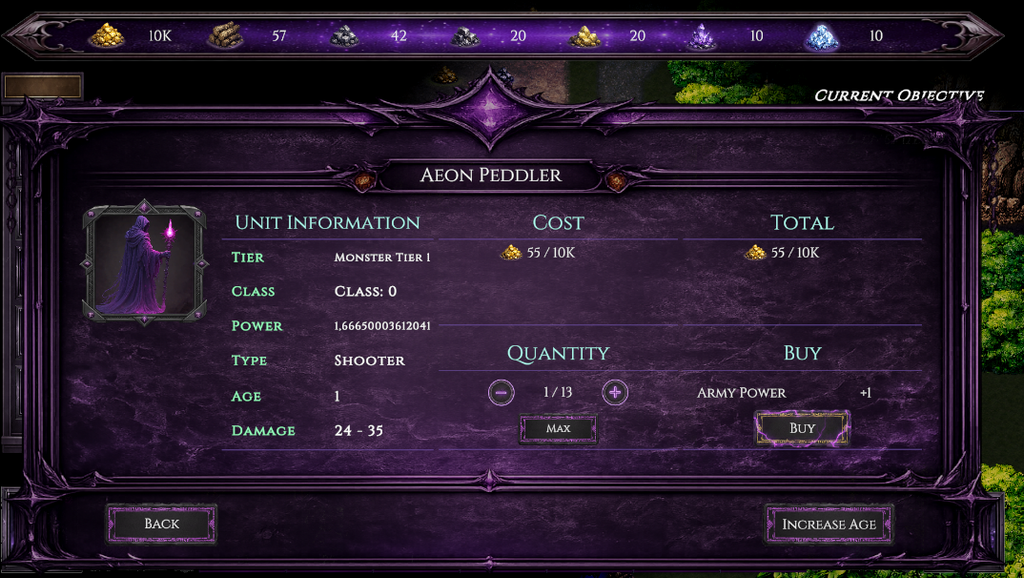
Unit Cards determine how many units you can obtain.
For example, during a map you might receive:
+5 Archer Cards
Those cards increase the number of Archers available to your army, but the units still need to be recruited through your castle and paid for using resources.
This creates two connected parts of the economy.
Cards determine what you have unlocked and how much you can obtain, while resources determine what you can currently afford.
Because cards persist, rewards collected throughout the campaign continue to matter on future maps.
Building Points
Castle development follows a similar philosophy.
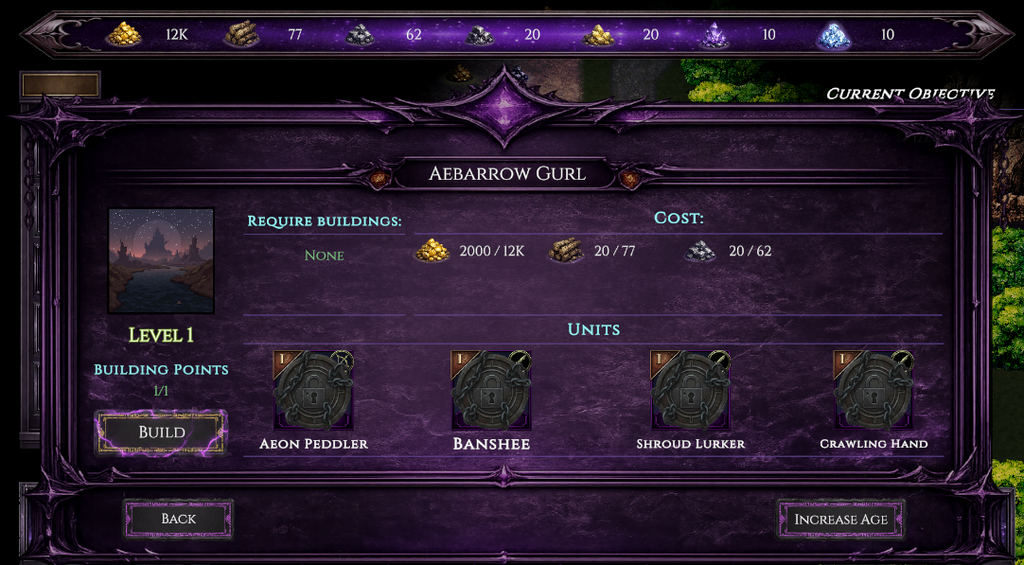
Instead of being able to freely construct everything as soon as you have enough resources, the player can earn Building Points during progression.
Building or upgrading structures consumes these points in addition to the required resources.
This allows castle development to remain connected to campaign progression instead of being driven entirely by resource accumulation.
And because the castle persists between maps, every upgrade contributes to the long-term development of your kingdom.
Hero, Skills and Spells
The same progression philosophy extends beyond units and buildings.
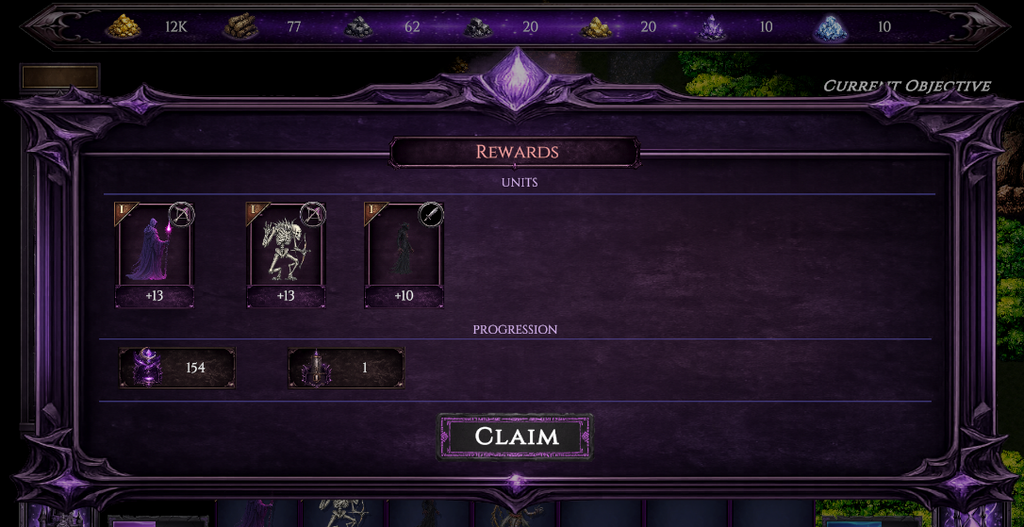
Maps can provide rewards that contribute to several parts of your character:
- Unit Cards
- Building Points
- Hero development
- Skill Points
- Spell progression
- Resources
Instead of every system progressing independently, rewards from exploration and objectives feed into the same persistent progression.
The world map therefore isn’t something you simply need to cross before returning to the castle.
What you accomplish on the map determines how your character develops.
Progression Across Four Ages
The campaign is also divided into four Ages.
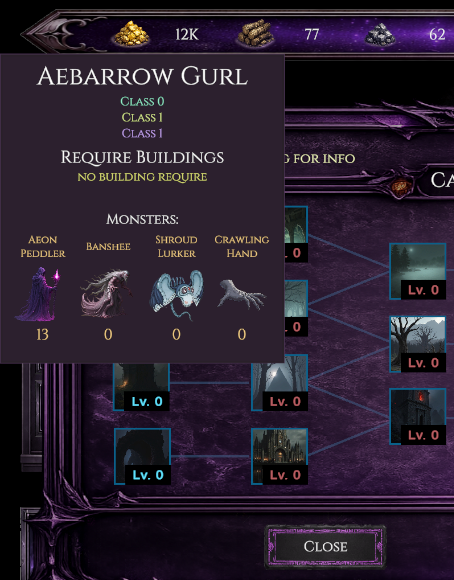
Your castle begins in Age I and gradually develops as its buildings are upgraded.
Reaching later Ages unlocks access to increasingly powerful units and new stages of progression.
Units themselves evolve alongside this system.
A unit you use early in the campaign doesn’t represent the final version of that unit line. As your civilization advances, new forms become available and the army progresses with it.
With six playable races and progression across four Ages, the full game contains 456 units.
The goal is to make progression continue far beyond the opening hours rather than allowing the player to reach the majority of the game’s content early in the campaign.
Why 357 Maps?
357 maps may sound like a strange number, but Age of Failon isn’t designed around hundreds of identical standalone scenarios.
The maps form the structure through which the campaign, economy, difficulty and story progress.
Early maps introduce the game’s systems and begin building the player’s army.
Later maps can assume that the player has developed their hero, castle, spells, skills and a much larger selection of units.
Because progression persists between them, each map becomes another step in the development of the same character and army.
It also means the economy has to remain balanced over hundreds of maps rather than only a single scenario.
A large part of the development over the past months has therefore been spent building systems that can predict and control progression far into the campaign.
I’ll talk more about that technical side in a future devlog.
Maps Are No Longer Just Battlefields
Changing progression also changed the purpose of individual maps.
If rewards are tied to what the player accomplishes, maps need to provide meaningful goals rather than simply placing two competing heroes into the same world.
This led to another major system: Map Objectives.
Players can be asked to hunt specific enemies, capture or defeat guarded locations, collect resources, develop their castle or face enemy heroes that appear as part of the scenario.
Objectives can also interact with the story and dynamically change what happens on the map.
And that is where we’ll continue next time:
Devlog #6 – Objectives: Changing How Age of Failon Maps Are Played.