
Devlog #8 – The Castle, Four Ages and 456 Units
In the previous devlog, I covered the changes made to the Battle System.
This time, I want to return to something that affects almost every part of the campaign: your castle and army progression.
Age of Failon is designed around a very long persistent campaign. Because of that, I didn’t want the player to unlock most of their castle and army during the opening part of the game and then spend hundreds of maps simply increasing the same numbers.
The progression needed multiple stages.
This is where the Four Ages come in.
Six Playable Races
Age of Failon contains six playable races:
- Human
- Angel
- Elf
- Barbarian
- Necropolis
- Dwarf
Your race determines the castle and unit progression available to your character.
Each race has its own army, but every race follows the same underlying progression structure so the economy can remain balanced across the entire campaign.
At the beginning, however, only a fraction of that progression is available.
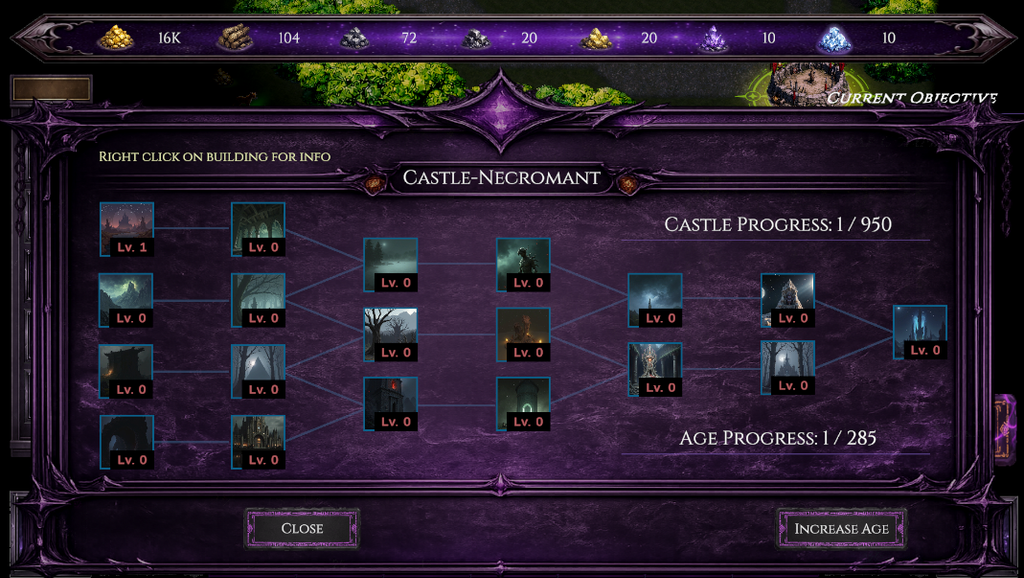
19 Unit Lines
Each race has 19 unit lines connected to its castle.
These units are not all unlocked at once.
Instead, they develop together with the castle as the player progresses through the Four Ages.
A unit available during the beginning of the campaign can eventually evolve into increasingly powerful forms rather than simply remaining unchanged for hundreds of maps.
This creates a long-term connection between castle development and army development.
Improving your civilization changes the army you can field.
The Four Ages
Every castle begins in Age I.
Buildings can then gradually be constructed and upgraded using the Building Points and resources earned throughout the campaign.
The major progression thresholds are:
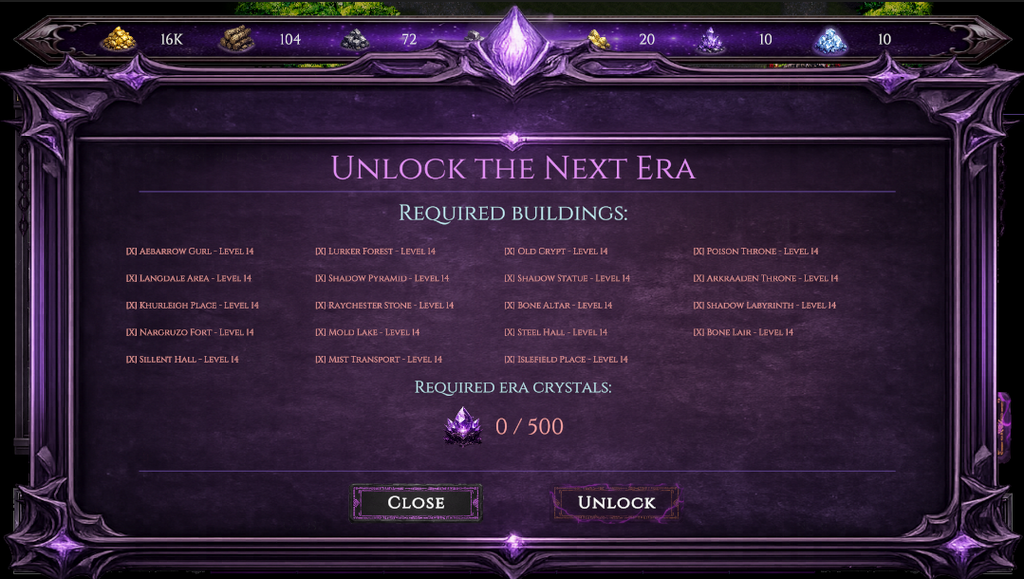
Level 15 → Age II
Level 30 → Age III
Level 45 → Age IV
Reaching a new Age opens the next stage of castle and unit development.
This means progressing to another Age isn’t simply a global stat increase.
It changes what the castle can produce and gives the player’s existing army access to the next generation of units.
456 Units Across the Full Game
The scale becomes much easier to see when all races and Ages are combined.
Each race has:
19 units × 4 Ages = 76 units
Across six playable races:
76 × 6 = 456 units
These units are distributed throughout the progression rather than being presented to the player immediately.
Age I introduces the initial army.
Age II expands and evolves it.
Age III continues that progression.
And Age IV represents the final stage of the unit lines.
The intention is for the army to continue changing even deep into the campaign.
Evolving Existing Armies
Introducing a new Age created an important design problem.
What happens to the army the player has already spent many maps building?
Simply unlocking a stronger unit while leaving all previous progression behind would punish the player for investing in their existing army.
So Age of Failon includes a unit evolution system.
When a unit line advances into its next Age, the player’s existing progression can be converted into the new version while accounting for the difference in unit power.
The goal is to preserve the value the player has already earned rather than forcing them to restart the same army progression every time a new Age begins.
Building Points and Resources
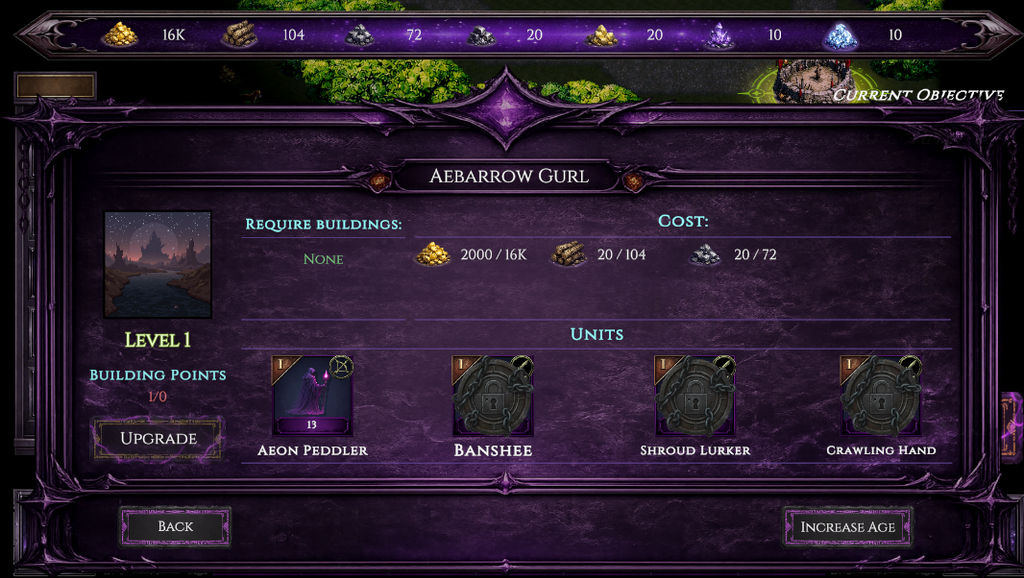
Castle development uses two connected economies.
Building Points control progression.
Resources control affordability.
Building Points are earned as rewards while progressing through maps. Resources are collected throughout the world and received from other parts of the economy.
To construct or upgrade a building, the player therefore needs both.
This prevents a large stockpile of resources from allowing the castle to skip huge sections of progression while still making resource management important.
The same principle appears elsewhere in the game.
Unit Cards determine how many units the player has earned access to, while resources determine how many of those units can currently be recruited.
Progression and economy work together instead of being the same thing.
A Castle Built Across the Campaign
The castle in Age of Failon does not physically exist as an object that needs to be visited on every map.
It is part of the persistent game interface and travels with the player’s progression throughout the campaign.
This was a deliberate design decision.
With 357 maps, repeatedly travelling back to a physical castle simply to perform management actions would add a large amount of unnecessary movement.
Instead, the castle acts as the player’s persistent strategic base.
The world is where you explore, fight and complete objectives.
The castle is where the rewards from those actions are transformed into long-term progression.
Progression That Has Room to Grow
The Four Ages are ultimately about giving the campaign enough progression space.
A game lasting only a few scenarios can afford to unlock most of its systems quickly.
A campaign spanning hundreds of maps cannot.
Castle levels, Building Points, Unit Cards, resources, Ages and unit evolution are all parts of the same progression structure designed to continue providing meaningful development far into the game.
Your castle at the beginning of Age of Failon should look very different from the castle you have built after hundreds of maps.
And the same should be true for the army fighting beside your hero.
So far, these devlogs have focused heavily on systems.
But Age of Failon has also changed in another major way.
The campaign now has characters, dialogue, voice acting, story events and an opening cinematic.

Next:
Devlog #9 – Bringing the Story of Failon to Life.